
2025 at a glance
Population of Calgary
1,558,700
-
3,321
Total Calgary Police Service employees -
2,321
Police officers70% of employees
-
1,000
Civilian employees30% of employees
Growth of the CPS
-
Million for operating and capital
-
-
-
Total calls for service
-
372,887
Public-generatedUp 5%
-
192,477
Officer-generatedUp 4%
-
26,773
Online reports from the publicUp 35%
-
Up 15%
-
Supporting Calgarians applying for employment and volunteer opportunities
Down 8%
2025 highlights

Throughout 2025, the Calgary Police Service (CPS) made some noteworthy achievements and adapted to dynamic crime trends. The following highlights are the result of efforts from across the Service and external partnerships responding to the evolving needs of Calgarians. Highlights include:
- Violent crimes increased: Violent crime in 2025 was 4% higher than 2024 and 16% above the five-year average. Assaults accounted for 68% of all violent crime, and saw in an 18% increase compared to the five-year average.
- Property crimes increased: Property crimes increased by 14% compared to 2024 and 4% from the five-year average. 1
- New Chief appointed: 2025 marked the first year under Chief of Police Katie McLellan, bringing decades of frontline and executive policing leadership experience to the role.
- Improved employee engagement: The Employee Engagement Index increased to 59 (up from 55 in 2024). Civilians reported higher engagement (75), while sworn members showed significant improvement, moving from 47 in 2024 to 51 in 2025.
- Public safety operations: Under the Safer Calgary initiative, the Service, in partnership with various agencies, led three major operations focused on enhancing public safety in high-priority areas.
- G7 Summit success: The CPS supported the successful G7 Summit by co-ordinating Unified Command Centre operations, strategic personnel deployment and effective traffic and crowd management, while maintaining core policing services and public safety throughout the high-demand period.
- Funding for crisis support: Through the Community Safety Investment Framework (CSIF), the CPS allocated $7,991,852 to 12 initiatives to enhance crisis support services.
1This increase was driven by an increase in shoplifting. Due to the processing time of online reporting related to shoplifting, these numbers are different than previously published 2025 reports.
Effective police governance
The CPC is a governance board of seven community members, three Government of Alberta appointees and two City of Calgary councillors. The CPC hires and supervises the police chief, establishes police policies, works with the police to set annual priorities and plans, monitors aspects of the police complaint process and approves how the police budget is spent.
The CPC is the oldest police board in Alberta. Over the course of 2025, it:
- Held 10 Commission meetings, 32 sub-committee meetings and one strategy day, to fulfill all legislated obligations and provide governance and oversight of the CPS.
- Appointed a new police chief, setting a new strategic direction for the CPS’ executive leadership team.
- Replaced fine revenue in the police budget, ending the longstanding practice of funding policing through enforcement-derived revenue.
- Provided oversight for policing related to several high-profile events including the G7 Summit.
- Strengthened working relationships with the Government of Alberta, and Calgary’s newly elected Mayor and councillors.
- Secured funding for investments in civilian roles, facility upgrades and fleet maintenance.
- Conducted community and employee surveys to inform police priorities.
- Redesigned commissioner onboarding and training to improve effectiveness.
- Restructured committees to improve efficiency and better focus on priorities.
- Partnered with other police boards and governance associations to share knowledge on both the provincial and national levels.

Crime and public safety in Calgary
Violent crime continued to increase in 2025. While robberies and shooting decreased, there were approximately 500 (4%) more assaults than in 2024. Targeted public safety challenges, such as traffic fatalities and social disorder, required focused enforcement and prevention efforts. The CPS initiated efforts to modernize service delivery, strengthen partnerships and enhance accountability to better meet evolving community needs.
-
422
Crime guns seizedChange from 2024: 23% increase
Change from 5-year average: 17% decrease *from the 4-year average, 5-year average unavailable
-
54
ShootingsChange from 2024: 31% decrease
Change from 5-year average: 47% decrease
-
15
HomicidesChange from 2024: 28.6% decrease
Change from 5-year average: 43.6% decrease
-
11,605
AssaultsChange from 2024: 4.3% increase
Change from 5-year average: 18.4% increase
-
711
Street robberiesChange from 2024: 1.9% increase
Change from 5-year average: 10.4% increase
-
321
Commercial robberiesChange from 2024: 17.4% decrease
Change from 5-year average: 8.5% decrease
-
Dwelling: 1,296
Break and entersChange from 2024: 5.8% increase
Change from 5-year average: 13.3% decrease
-
Commercial: 2,870
Break and entersChange from 2024: 1.3% increase
Change from 5-year average: 22.8% decrease
-
4,088
Vehicle theftsChange from 2024: 7.6% decrease
Change from 5-year average: 20.1% decrease
-
1,318
Sexual assault offencesChange from 2024: 3.4% decrease
Change from 5-year average: 4% decrease
-
149
Hate crimesChange from 2024: 2.7% increase
Change from 5-year average: 22% increase
-
310
Demonstrations managedChange from 2024: 10% decrease
Change from 5-year average: 13% decrease
-
3,373
Injury collisionsChange from 2024: 9.5% increase
Change from 5-year average: 33.7% increase
-
38
Fatal CollisionsChange from 2024: 31% increase
Change from 5-year average: 72.2% increase
-
81,955
Disorder eventsChange from 2024: 5.3% increase
Change from 5-year average: 4.1% decrease
The Community Safety Dashboard offers up-to-date crime statistics for Calgary. For more information on crime statistics visit: data.calgarypolice.ca.
Responding to the community
The CPS prioritized the needs of the community in 2025. We receive regular feedback through different channels that allow us to best prioritize resources to meet the evolving needs of Calgarians. Notable initiatives that responded to community needs included:

Service Delivery Modernization
The Service Delivery Modernization (SDM) program launched to redesign how policing services are structured, delivered and experienced. SDM focuses on: leveraging the existing workforce, managing calls for service effectively, improving frontline deployment, response times and member well-being, and expanding online and virtual services.
Police Review Commission
The provincial Police Review Commission (PRC) was launched in December 2025. The PRC now handles complaints related to police conduct, while the Professional Standards Section continues to manage complaints related to police performance, services, and policy.


Calgary Screening Project
The Alberta Crown Prosecution Service partnered with the Service to pilot an early charge-screening process where prosecutors review charges immediately after they are laid, enabling real-time collaboration with officers. This approach replaces the later review stage that often cause delays and last-minute adjustments or charge withdrawals or stays, improving efficiency in the judicial process. Between September and November 2025, 61% of charge packages submitted in the two districts involved in the Calgary Screening Project, had charges recommended by the crown on first submission.
Recruitment
The CPS held numerous engagements to support and promote careers in policing among diverse communities. These engagements build upon existing recruitment programs, including Indigenous Pathways to Policing, Women’s Recruitment Bootcamps and a variety of inclusive opportunities offered through the Recruiting and Selection Unit.

Supporting those who serve
Our members are the backbone of public safety in Calgary and it’s important that we maintained focus on their well-being throughout 2025. In 2025, we supported employees through the following:
- A new performance assessment process was launched in the Fall to support member development, align with the CPS Leadership Competencies and offer a more consistent and structured opportunity for members to engage in performance discussions and development planning with their supervisors.
- The CPS Behaviour Zones were launched in 2025 alongside an updated Respectful Workplace Policy and Harassment Prevention Plan. The Behaviour Zones provide all members with a clear framework to identify and report inappropriate workplace behaviour, while also strengthening the foundation for existing respectful workplace processes and culture initiatives.
- As a Service, we continued work to strengthen the Abilities Management and Return to Work Programs. These efforts focused on streamlining the processes for returning to work following medical leaves and accommodations in alignment with best practice, engaging with City of Calgary partners and ensuring members are supported by addressing the unique complexities that policing introduces to these processes (e.g. training re-qualifications, etc.).
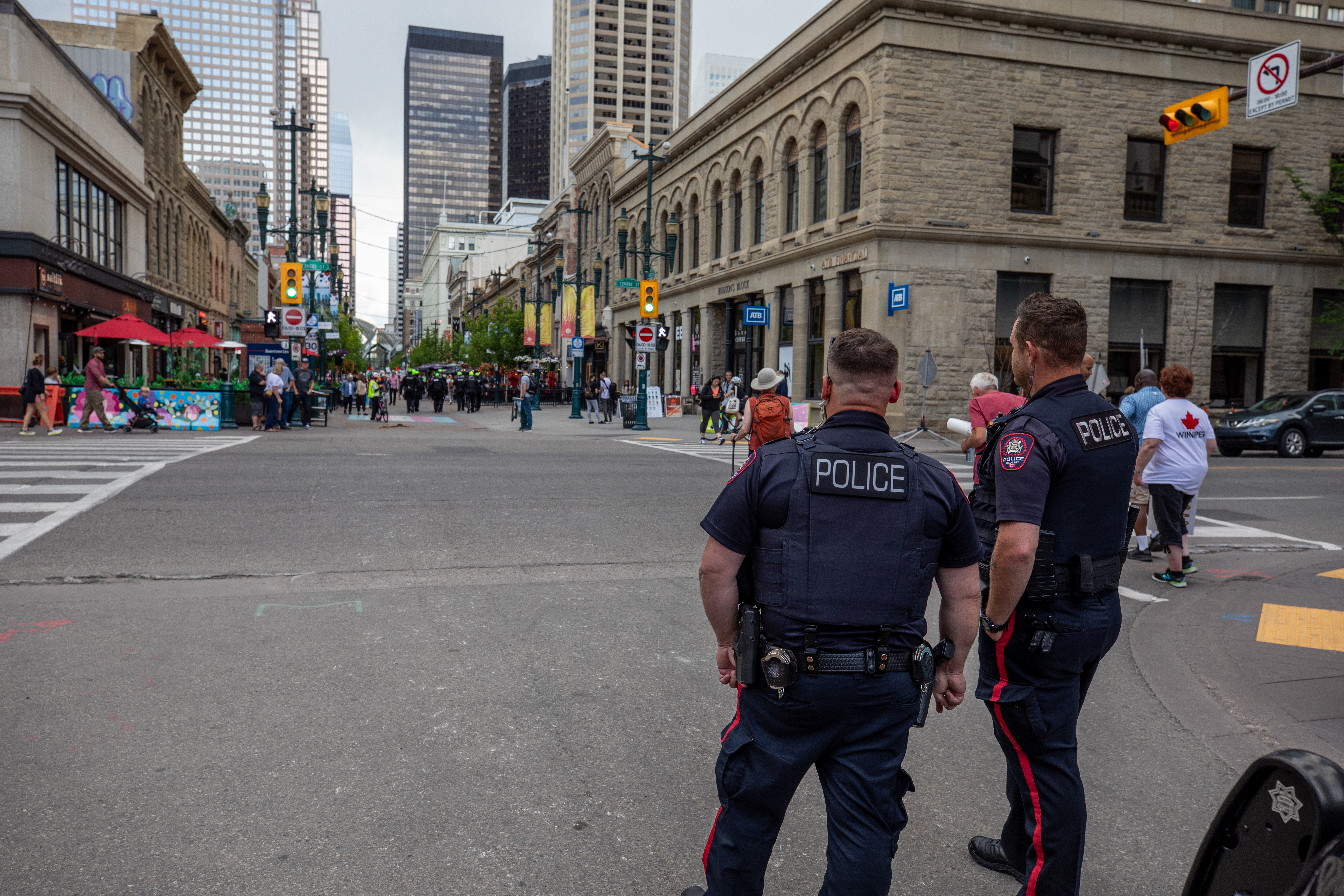
Engaging the community
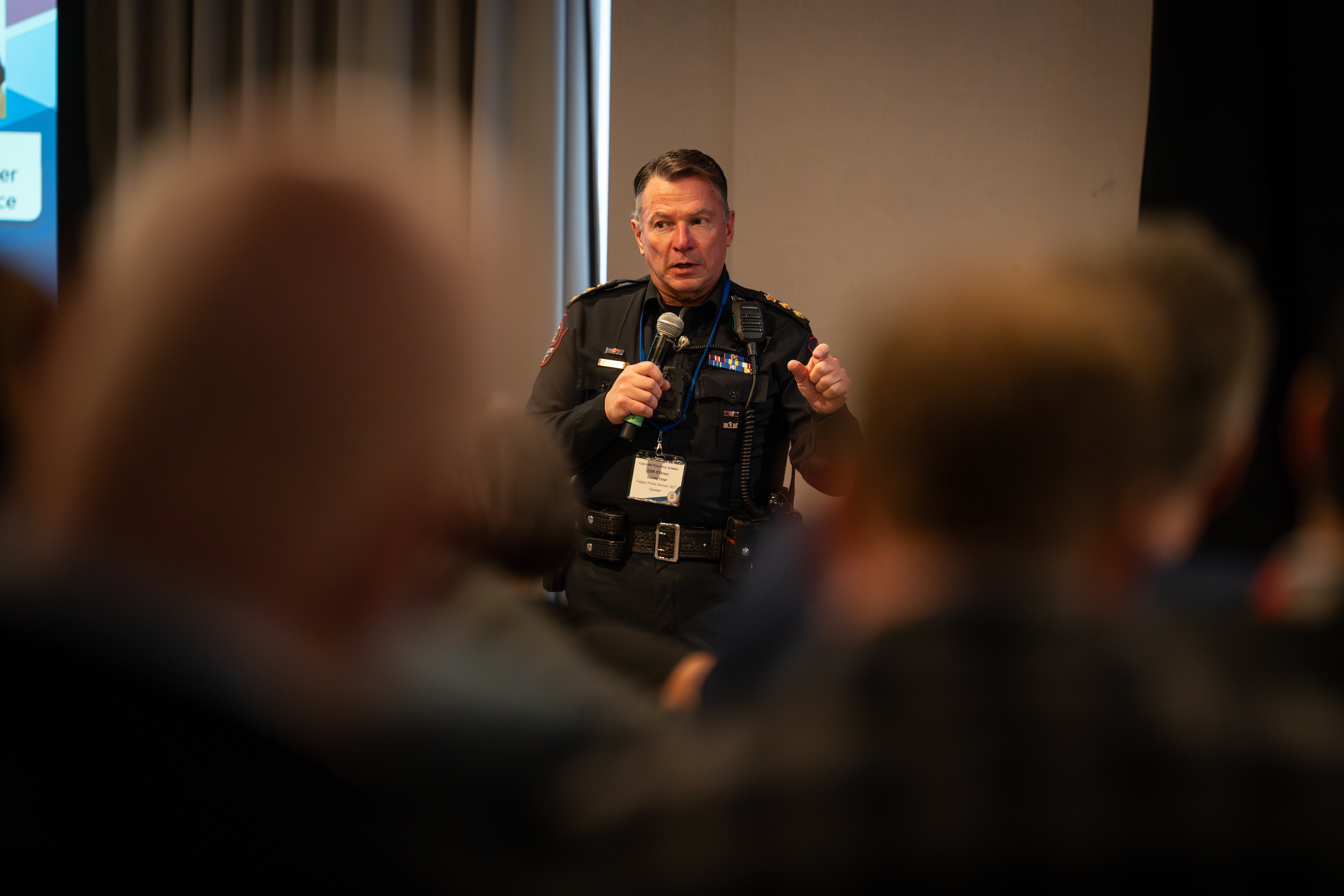
The CPS leveraged several third-party reports and surveys to gain better insight into the thoughts and needs of Calgarians and to also ensure public communication efforts are effective and well-received. In 2024:
- The 2025 Summit convened 350 community leaders, business professionals, industry partners and elected officials for a full day of dialogue designed to strengthen collaboration and advance shared approaches to public safety. Through expert panels, live polling and direct engagement opportunities, attendees contributed insights meant to inform future CPS strategies and enhance public trust.
- 80% of respondents of the CPC’s 2025 Community Perceptions Survey view Calgary as safe, but 57% shared the perception that there are observable increases in homelessness, drug use and mental health-related disturbances in public spaces and transit areas, along with more frequent incidents of theft, vandalism and violence. A majority of Calgarians (61%) support increased funding for the Service to hire more officers to enhance public safety and address crime.
To directly engage Calgarians, the CPS guided efforts to improve the impact of online and in-person communications. Some of the initiatives actioned in 2025 worked to improve social media content, grow the reach of online networks, provide community-specific information and foster real-time interactions with members of the public.
- Across the CPS’ social media channels, we added 59,526 new followers, published 5,966 posts and had an engagement rate of 6.36%. The industry benchmark for government organizations is between 1 to 3%.
- 2025 emerged as a strong year for human-interest and transformational storytelling, with this content consistently driving higher engagement and contributing positively to overall social media performance. These stories resonated with the online community and outperformed other content types.
- Later in the year, the CPS Traffic Unit began sharing traffic stop-related content across social media, highlighting the daily efforts of officers to address dangerous driving and unsafe road behaviours. This increased transparency resonated positively with the public and has begun to shift the narrative, reinforcing public confidence that officers are actively working to keep Calgary’s roads safe every day.
- Community Resource Officers (CROs) facilitated 45 Coffee with a Cop/Coffee with a Uniform events. These events provide informal opportunities for citizens to engage with law enforcement officers who serve in their communities. As a result, officers takeaway a better understanding of the needs of the Calgarians they serve.

Police budget
Operating Budget
(rounded to $ millions)
| Expenditures | 2025 (Budgeted) | 2025 (Actual) | 2026 (Budgeted) | Category Details |
|---|---|---|---|---|
| Expenditures: Salaries and Wages | 2025 (Budgeted): 546 | 2025 (Actual): 530 | 2026 (Budgeted): 577 | Category Details: Payroll for all employees (both police officers and civilian staff) including mandatory employer contributions, statutory premiums, shift premiums and court time. All salaries and any related premiums are negotiated by The City of Calgary’s Labour Relations Unit with the assistance of the CPS’ management. CPS is focused to vacancy management in alignment with regular attrition and turnover. |
| Expenditures: Overtime & Call Out | 2025 (Budgeted): 11 | 2025 (Actual): 21 | 2026 (Budgeted): 11 | Category Details: Overtime and call out for hours worked in excess of a shift or when investigations or major events require additional staffing. Officers are often required to finish laying charges or supporting victims of an incident past when their shift is scheduled to end in order to maintain officer continuity. This results in some unavoidable overtime. The Service actively manages overtime of both officers and civilians. Further, protests and large event policing requirements impact overtime and callout use, along with the need to cover vacant positions by offering overtime to other employees. |
| Expenditures: Materials and Supplies | 2025 (Budgeted): 16 | 2025 (Actual): 16 | 2026 (Budgeted): 16 | Category Details: Body-worn camera subscription fees, ammunition and equipment life cycling, uniforms, computer hardware and software requirements, vehicle replacement parts, etc. |
| Expenditures: Contracted Services | 2025 (Budgeted): 23 | 2025 (Actual): 30 | 2026 (Budgeted): 25 | Category Details: Contracted healthcare services, psychological supports, crime testing kits, labour relations support, external legal expertise and specialized consultants to support long-term strategic plans (including the Service’s anti-racism and inclusion work). This category includes the Service’s commitment to CSIF (Community Safety Investment Framework). Also, this category includes funding that provides external wellness supports to employees and their families. |
| Expenditures: Insurance and Security | 2025 (Budgeted): 14 | 2025 (Actual): 15 | 2026 (Budgeted): 14 | Category Details: Contracting Commissionaires for security and photo enforcement support, and insurance for all vehicles and facilities. |
| Expenditures: Maintenance and Rental of Equipment and Buildings | 2025 (Budgeted): 17 | 2025 (Actual): 22 | 2026 (Budgeted): 17 | Category Details: Janitorial services, building maintenance, computer hardware and software maintenance, and leasing costs for facilities not owned by the Service. |
| Expenditures: Utilities | 2025 (Budgeted): 5 | 2025 (Actual): 4 | 2026 (Budgeted): 5 | Category Details: Electricity, natural gas, water and sewer for all police facilities. |
| Expenditures: Vehicle Operation | 2025 (Budgeted): 6 | 2025 (Actual): 9 | 2026 (Budgeted): 6 | Category Details: Fuel for vehicles and specialty equipment, vehicle repairs, tires and maintenance. Replacement parts are captured separately in the materials and supplies category, and vehicle replacement is captured separately in the capital budget. |
| Expenditures: Business Expenses | 2025 (Budgeted): 5 | 2025 (Actual): 4 | 2026 (Budgeted): 5 | Category Details: Mandatory recertification training, courses for skills upgrading, investigative travel, membership fees, volunteer expenses, and youth programing expenses. The Service strives to bring trainers to Calgary instead of sending groups of employees on trips. However, travel for some training is unavoidable. |
| Expenditures: Communication Expenses | 2025 (Budgeted): 8 | 2025 (Actual): 8 | 2026 (Budgeted): 8 | Category Details: Postage for tickets and other outgoing mail, cell phone data and airtime, radio network maintenance, advertising, printing and promotional campaigns. |
| Expenditures: Contributions to/(from) Reserves | 2025 (Budgeted): 12 | 2025 (Actual): 12 | 2026 (Budgeted): 6 | Category Details: Savings for known future expenses, including lifecycle replacement and major maintenance of the HAWCS helicopters, replacement of red-light cameras, and vehicle replacement. |
|
Expenditures:
HAWCS Reserve Red Light Camera Reserve Vehicle Reserve Pay-As-You-Go Reserve Court Fine Reserve |
2025 (Budgeted):
4 1 7 0 0 |
2025 (Actual):
4 1 7 2 2* |
2026 (Budgeted):
1 1 4 0 0 |
Category Details:
*At 2025 year end, the Court Fine Reserve was utilized to help offset negative net effects of Fines and Penalties. |
| Total Expenditures | 663 | 671 | 690 |
| Funding Sources | 2025 (Budgeted) | 2025 (Actual) | 2026 (Budgeted) | Category Details |
|---|---|---|---|---|
| Funding Sources: Municipal Taxes | 2025 (Budgeted): 541 | 2025 (Actual): 541 | 2026 (Budgeted): 615 | Category Details: While provincial grants, fines, user fees and other revenues reduce the cost of policing, the bulk of the police budget is funded using tax dollars collected by The City of Calgary. |
| Funding Sources: Fines and Penalties | 2025 (Budgeted): 48 | 2025 (Actual): 25 | 2026 (Budgeted): 0 | Category Details: For 2025, this is income from tickets issued through photo radar, speed on green cameras, red light cameras and officer traffic stops. Changes to provincial enforcement regulations had an unfavorable impact. For 2026 and onward, Fines and Penalties (budget and actual) is under the City Corporate Programs Business Unit, as approved at The City’s mid-cycle budget adjustment process (November 2025). |
| Funding Sources: Federal Grants | 2025 (Budgeted): 0 | 2025 (Actual): 17 | 2026 (Budgeted): 0 | Category Details: Federal funding from Public Safety Canada in 2025 to offset G7 Summit expenses incurred. |
| Funding Sources: Provincial Grants | 2025 (Budgeted): 48 | 2025 (Actual): 50 | 2026 (Budgeted): 48 | Category Details: The majority relates to the provincial funding of approximately 330 police officers through the Policing Support Grant. Further funding of 50 police officers is through an additional grant that began in 2024. |
| Funding Sources: Sales of Goods & Services | 2025 (Budgeted): 20 | 2025 (Actual): 28 | 2026 (Budgeted): 21 | Category Details: Fees are charged for some services, including providing airport security, policing large events, monitoring scrap sales, providing security clearances and providing officers and other supports to provincial policing initiatives. |
| Funding Sources: Alarm Bylaw Fees | 2025 (Budgeted): 1 | 2025 (Actual): 1 | 2026 (Budgeted): 1 | Category Details: Permit and false alarm infraction fees for security alarms. |
| Funding Sources: Miscellaneous Revenue | 2025 (Budgeted): 1 | 2025 (Actual): 2 | 2026 (Budgeted): 1 | Category Details: Sale of assets, youth program recoveries, interest income from reserve accounts and any other miscellaneous income. |
| Total Funding | 659 | 664 | 686 |
| Recoveries | 2025 (Budgeted) | 2025 (Actual) | 2026 (Budgeted) | Category Details |
|---|---|---|---|---|
| Recoveries: Internal Cost Recoveries | 2025 (Budgeted): 4 | 2025 (Actual): 7 | 2026 (Budgeted): 4 | Category Details: Costs recovered from other City of Calgary business units for policing services at events, use of the Service’s two-way radio infrastructure and security clearances. |
| Total Recoveries | 4 | 7 | 4 |
Capital Budget
rounded to $ millions
| Expenditure | 2025 (Budgeted) | 2025 (Actual) | 2026 (Budgeted) | Category Details |
|---|---|---|---|---|
| Expenditure: Facilities | 2025 (Budgeted): 28 | 2025 (Actual): 4 | 2026 (Budgeted): 42 | Category Details: Infrastructure maintenance for 29 owned facilities and 14 leased facilities. Included in this capital budget are carried-over funds for a district office replacement and new indoor firearms range. |
| Expenditure: Vehicles | 2025 (Budgeted): 16 | 2025 (Actual): 13 | 2026 (Budgeted): 16 | Category Details: Lifecycle replacement of vehicle equipment and vehicles. The Service has over 1,200 vehicles that are typically replaced after seven years or 160,000 kms. This expense is covered from savings in the Vehicle Reserve. |
| Expenditure: Equipment | 2025 (Budgeted): 5 | 2025 (Actual): 1 | 2026 (Budgeted): 4 | Category Details: Upgrading standard-issue equipment and lifecycle replacement of red-light cameras. The cost of red-light camera replacement is covered from savings in the red-light camera reserve fund. |
| Expenditure: Communications | 2025 (Budgeted): 9 | 2025 (Actual): 6 | 2026 (Budgeted): 8 | Category Details: Lifecycle replacement of existing communication systems, including portable radios, phones and network infrastructure. |
| Expenditure: Computers | 2025 (Budgeted): 6 | 2025 (Actual): 5 | 2026 (Budgeted): 5 | Category Details: Lifecycle replacement of hardware, servers/storage and security infrastructure. |
| Expenditure: Automated Fingerprint Identification System | 2025 (Budgeted): 0 | 2025 (Actual): 0 | 2026 (Budgeted): 0 | Category Details: Lifecycle replacement of system. |
| Total Funding | 64 | 29 | 75 |
Police conduct
Police conduct complaints
The CPS and the CPC make statistics on police conduct complaints public in two reports. High-level statistics are reported in the annual report, followed by a detailed report being released on the CPS’ website later in the year to outline how complaints were addressed.
| Police conduct complaints | 2020 | 2021 | 2022 | 2023 | 2024 | 5 Year Average | 2025 |
|---|---|---|---|---|---|---|---|
| Police conduct complaints: Total Files Opened* | 2020: 1,368 | 2021: 1,434 | 2022: 1199 | 2023: 1,228 | 2024: 1,237 | 5 Year Average: 1,293 | 2025: 1,189 |
| Police conduct complaints: Contacts | 2020: 888 | 2021: 977 | 2022: 796 | 2023: 879 | 2024: 874 | 5 Year Average: 883 | 2025: 761 |
| Police conduct complaints: Complaints | 2020: 298 | 2021: 331 | 2022: 285 | 2023: 252 | 2024: 272 | 5 Year Average: 288 | 2025: 294 |
| Police conduct complaints: Internal Complaints | 2020: 106 | 2021: 43 | 2022: 46 | 2023: 46 | 2024: 31 | 5 Year Average: 54 | 2025: 59 |
| Police conduct complaints: 46.1 Files | 2020: 41 | 2021: 49 | 2022: 42 | 2023: 31 | 2024: 36 | 5 Year Average: 40 | 2025: 40 |
| Police conduct complaints: Criminal/Statutory Files | 2020: 35 | 2021: 34 | 2022: 30 | 2023: 20 | 2024: 24 | 5 Year Average: 29 | 2025: 29 |
*Includes files opened between Jan. 1 — Nov. 30, 2025. Files submitted in Dec. 2025 were received by the PRC, an external agency to the CPS, and are not included in this report.
Definitions:
Contacts: When a member of the public contacts the CPS to raise a concern about police conduct, make an enquiry or request assistance. These can later turn into complaints.
Complaints: A complaint about the conduct of a police officer where the actions may have been a violation of police regulations or policies.
Internal Complaints: A complaint investigation initiated by the CPS itself regarding the conduct of a police officer where the actions may have been a violation of police regulations or policies.
46.1 Files: Notifications sent to the CPC and province about a police action that resulted in serious injury or death. These can lead to an investigation by the Alberta Serious Incident Response Team if the province determines it is within their mandate.
Criminal/Statutory Complaint: A complaint about an act by a police officer that may contravene provincial or federal legislation, like the Criminal Code. These complaints can be generated by a member of the public or by the CPS itself.
Compliments from the public recognizing police officers
| 2021 | 2022 | 2023 | 2024 | 2025 | 5 Year Average | 2025 vs 5yr avg | |
|---|---|---|---|---|---|---|---|
| : Compliments | 2021: 324 | 2022: 306 | 2023: 270 | 2024: 262 | 2025: 203 | 5 Year Average : 298 | 2025 vs 5yr avg : -32% |
Complaints against the chief
In 2025, there were no complaints filed with the Calgary Police Commission regarding the conduct of the police chief.
Additional resources
Annual Policing Plan
Every year, the CPS updates and publishes the Annual Policing Plan (APP) that highlights the Service’s key areas of focus and updates on the status of initiatives.
To download the APP, click here.
To view the APP’s Interactive Progress Report for updates on key performance indicators, visit: http://ourgoals.calgarypolice.ca/index.html
Professional Standards Section (PSS) Annual Report
Every year, the PSS reports on compliments, complaints, misconduct and the Section’s contributions to improving transparency, accountability and organizational efficiencies.
To view the PSS Annual Report, visit: https://www.calgary.ca/cps/public-services/community-accountability/misconduct-concerns-.html
The Community Safety Dashboard
The dashboard was developed to offer Calgarians the ability to gauge current crime and disorder in their community compared to previous timeframes as well as other geographic areas. The dashboard is updated on the fifth day of every month.
To view the interactive dashboard, visit: https://data.calgarypolice.ca/
Calgary Police Commission Community Perceptions Report
Every two years the CPC engages an independent third-party to conduct a survey that will provide insight into how the community perceives the CPS.
To download the most recent Community Perceptions Report, click here.
You may also be interested in
-
The Calgary Police Service (CPS) provides data and statistics about crime and disorder trends in Calgary. Data is provided at regular intervals.
-
We are committed to enhancing public safety in areas identified as hot spots for social disorder and crime, particularly downtown and along transit routes.
-
Ensuring the safety of all road users is a top priority for the Calgary Police Service.