
Police officers are entrusted with extraordinary powers and often work in dynamic and high-conflict situations. Cameras that record police interactions with the public can play a crucial role in protecting both the public and our officers, and support a fair justice system.
Our cameras
Calgary Police Service frontline officers use two types of cameras: body-worn cameras and in-car cameras.
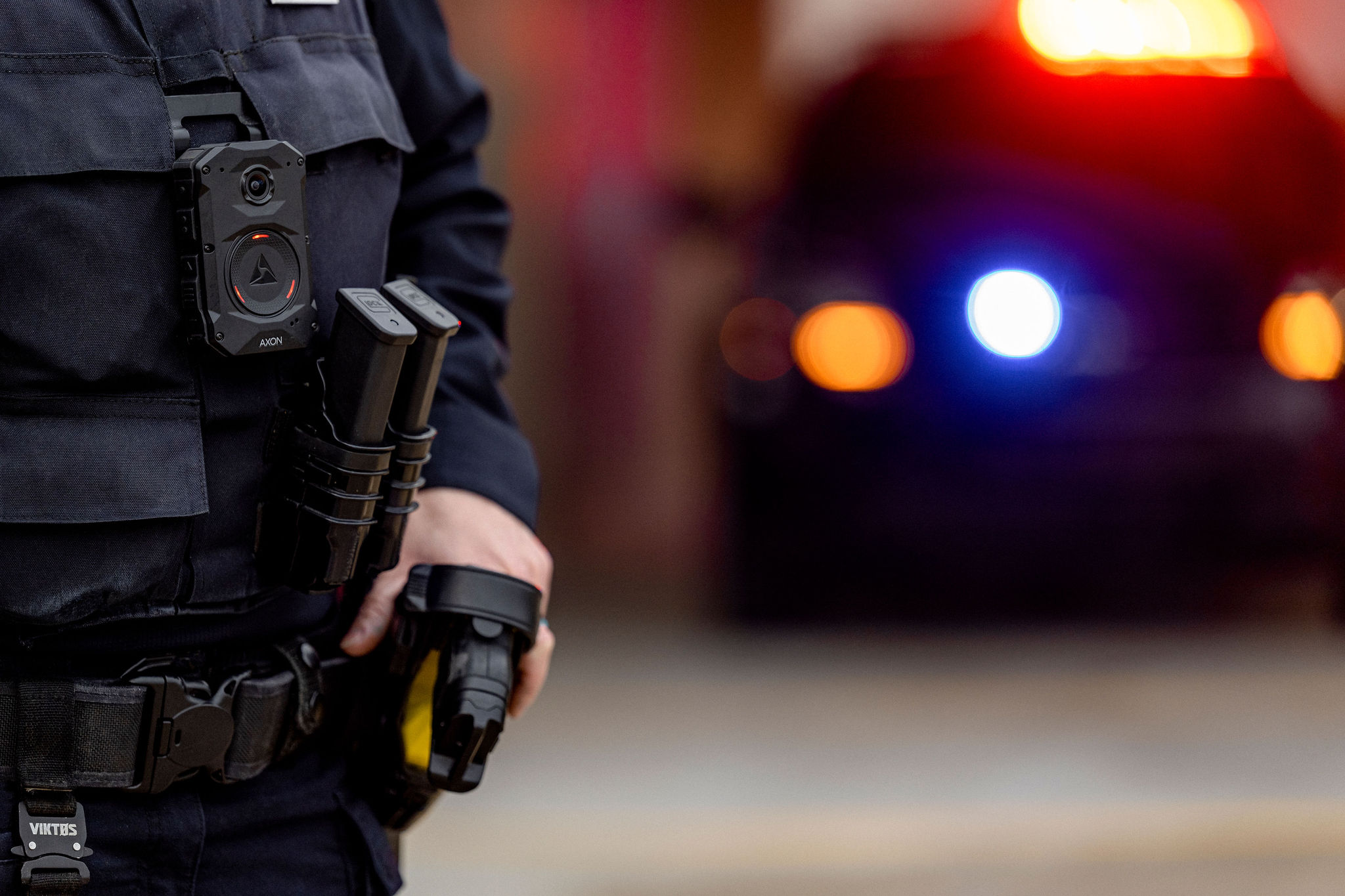
Body-worn cameras
Patrol, traffic and some specialty unit officers wear a small camera on their uniform to record audio and video during public interactions. Each recording includes the 30 seconds before activation.
The camera has a visible recording light, which can be turned off for safety reasons – such as during nighttime incidents involving firearms.
Officers are expected to use these cameras when interacting with the public, especially during:
- Arrests or detentions
- Use-of-force situations
- Investigative contacts
- Legal demands
- Laying charges
While officers are not required to tell you they are recording, they’re trained to do so when possible.
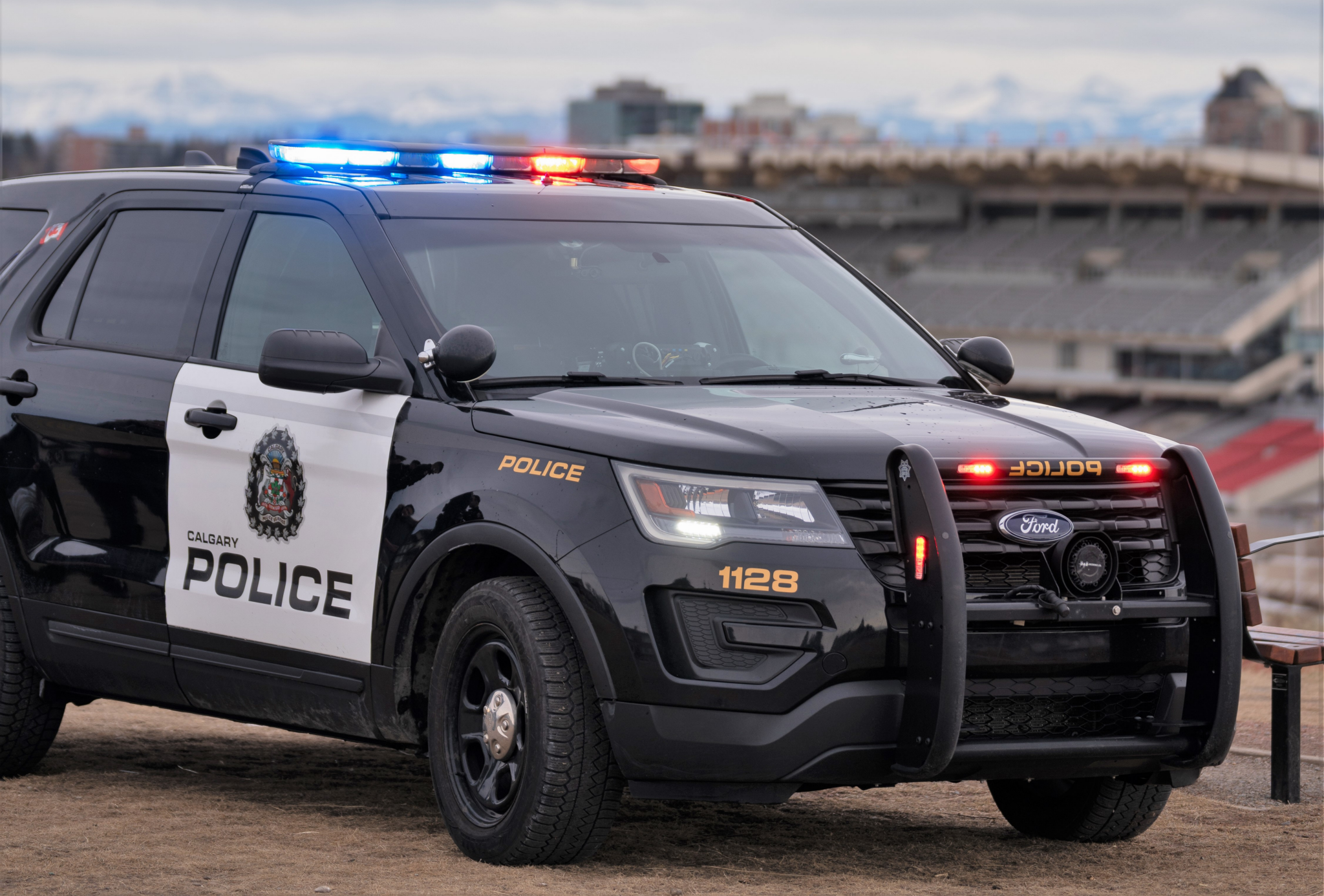
In-car cameras
Frontline police vehicles have both dash and back seat cameras that record audio and video. They activate automatically when the emergency lights are turned on or during a collision.
Each recording includes the 30 seconds before activation and ends only when an officer manually shuts them off.
Officers are expected to use these cameras during:
- Investigative contacts
- Transporting arrestees
- Pursuits
- Situations that support an investigation
Real-Time Translation
The Calgary Police Service (CPS) has introduced Real-Time Translation (RTT) on Axon Body 4 body-worn cameras to help officers communicate with people who speak a language other than English.
RTT is designed to support communication during routine police interactions, including traffic stops, calls for service and other day-to-day engagements with the public. By reducing language barriers, the technology can help officers and community members better understand one another, improve access to police services and support positive interactions.
What is Real-Time Translation?
Real-Time Translation is a feature within Axon Assistant that provides two-way audio translation directly through an officer's body-worn camera.
The feature allows officers and members of the public to communicate in different languages without requiring a separate device. Translated conversations occur in real time, helping officers communicate more effectively when a language barrier exists.
The technology currently supports more than 50 languages, with additional languages expected to become available in the future.
When is Real-Time Translation used?
Real-Time Translation is intended for routine, low-risk and initial interactions where a language barrier may impact communication.
Examples may include:
- Traffic stops
- Community interactions
- Calls for service
- Initial information gathering
- Situations where waiting for an interpreter may not be practical or safe
Officers must deliberately activate the feature and will use it when there is a reasonable belief that a language barrier exists.
How does it work?
When Real-Time Translation is activated:
- The body-worn camera automatically begins recording.
- Officers will inform individuals that the translation feature is being used.
- Officers will explain that the translation is generated through technology and is not provided by a certified interpreter.
- Conversations are translated in real time through the body-worn camera.
- Officers can switch between supported languages as needed during an interaction.
- Video and audio recordings are securely stored in accordance with existing body-worn camera processes.
Is Real-Time Translation a replacement for an interpreter?
No. Real-Time Translation is intended to support communication during routine interactions and is not a replacement for certified human interpreters.
The feature is not intended for:
- Formal witness statements
- Evidence collection
- Court proceedings
- Situations requiring certified interpretation services
Translation outputs will not be used as evidence in court unless reviewed and certified by a qualified interpreter.
Privacy and accountability
The Calgary Police Service is committed to using technology responsibly while protecting the privacy of the people we serve.
Because translated interactions are recorded through body-worn cameras, the use of RTT supports transparency and accountability. Recordings are securely stored in accordance with established body-worn camera practices.
CPS is also completing a Privacy Impact Assessment (PIA) in accordance with the Protection of Privacy Act. The assessment has been submitted to the Office of the Information and Privacy Commissioner for review.
Training and oversight
Officers have received training before using Real-Time Translation. Training includes user guides, instructional videos and scenario-based exercises designed to support consistent and responsible use of the technology.
CPS will continue to evaluate the effectiveness of the feature and explore opportunities for future improvements.
Privacy concerns
A privacy impact assessment was completed in January 2019 to evaluate privacy risks associated with body-worn cameras. Recordings are subject to Alberta’s Protection of Privacy Act and Health Information Act when officers are in healthcare facilities.
Footage may be disclosed to the courts, with third-party private information redacted beforehand.
Camera effectiveness
The Calgary Police Service has used in-car cameras since 2012 and body-worn cameras since January 2019.
Evaluations of both body-worn and in-car cameras have found evidence that the technologies help create a more efficient accountability process and reduce incidents where force is used.
Goals of body-worn cameras:
- Enhance transparency, public trust and confidence
- Enhance officer accountability and professionalism, and provide real-life training examples
- De-escalate situations and reduce use-of-force incidents by and against the police
- Protect officers from unfounded allegations of misconduct and increase the efficiency of the resolution of complaints against the police
- Improve evidence collection, documentation, and prosecution, including early case resolution
A 2020 review of both camera systems assessed the impact of these tools and informed future improvements.
The full reports are available below:
Policy and complaints
Use of body-worn camera at the CPS is governed by the Body Worn Cameras policy.
Complaints process
Concerns about misuse can be reported to the CPS Professional Standards Section. Complaints are handled under the Police Act and Police Service Regulation. The Act sets out the requirements of a valid complaint and outlines the process for filing a complaint.
Frequently Asked Questions
How much does it cost for the CPS to utilize body-worn cameras?
The use of body-worn cameras requires many staff and resources that are dedicated to implementing and operating the CPS program. The program costs about $5 million annually to operate, including hardware, software licensing and staffing.
Do all CPS officers have/use body-worn cameras?
There are about 1,350 CPS officers currently using body-worn cameras. All patrol and traffic officers use them, along with uniformed officers in some specialty units, such as the Child at Risk Response Team (CARRT), the Police and Crisis Team (PACT) and the Tactical Support Unit (comprised of the Tactical and Canine teams).
Can I ask an officer to stop recording?
Officers are required by policy to have their body-worn camera activated during a law enforcement interaction with a member of the public, however, the officer will continually assess privacy considerations and prohibitions outlined in the CPS Body Worn Camera Policy if recording should continue or stop.
How do I ensure that my personal information during a body-worn camera recording is kept confidential?
A Privacy Impact Assessment was completed in January 2019 to assess and mitigate any risks posed to privacy using body-worn cameras. Any recording made by CPS cameras are subject to the Alberta Protection of Privacy Act.
The recordings are disclosed to the courts and the Crown discloses to legal counsel when required, but private third-party information captured in any recording is redacted or edited for legal, police tactical or security purposes.
Officers using body-worn cameras will balance privacy rights with law enforcement needs. Officers will not:
- disseminate body-worn camera images to any person or entity unless authorized by law
- use a body-worn camera to record any activities that are not required for a valid law enforcement purpose
- use a body-worn camera in a covert capacity to secretly record an interaction with anyone
How long are body-worn camera recordings stored?
Body-worn camera recordings will be automatically deleted after 13 months if officers have not identified their association to a case file.
If a recording becomes part of a case file, it will be retained according to the CPS Records Retention Schedule, depending on the type of case and the retention category.
Can I view or obtain a copy of body-worn camera video recordings of an incident that I was involved in?
If you would like to view or request a copy of a body-worn camera incident that you are involved in, you can file an Access to Information Request.
Once your request is approved, you can choose to either attend police headquarters (5111 47 St. N.E.) to view it or request a copy for a fee.
If you attend the CPS headquarters to view the recording, you will view the video with a Disclosure Analyst from the CPS Access and Privacy Section, who may be accompanied by a police officer.
If you choose to obtain a copy, a Disclosure Analyst will prepare a fee estimate for you. Once we have received payment, we will provide you with a copy. Please note that third-party information will be removed or blurred from the video. You may also view the video as part of a Professional Standards complaint. The Professional Standards Section will allow you to view the video in the presence of an investigator.
You may also be interested in
-
The Calgary Police Service (CPS) provides data and statistics about crime and disorder trends in Calgary. Data is provided at regular intervals.
-
We are committed to enhancing public safety in areas identified as hot spots for social disorder and crime, particularly downtown and along transit routes.
-
Ensuring the safety of all road users is a top priority for the Calgary Police Service.